
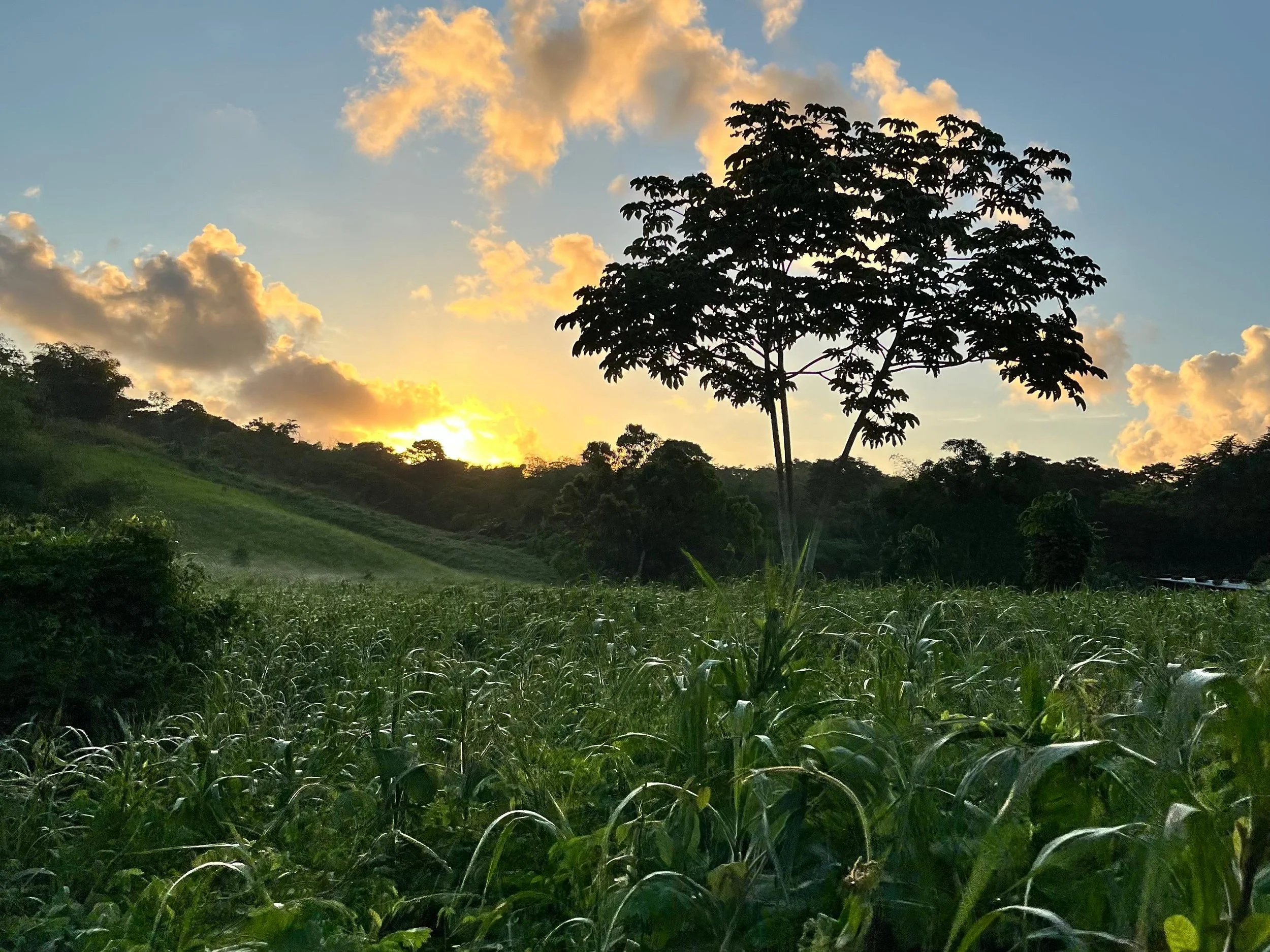
Diary of the Rural Woman
How living in the middle of nowhere taught me about ethical consumption and sustainable living.
All my life, I’d been fascinated with the city. I grew up watching girls on TV move to the big city, where they’d make all their dreams come true. Unfortunately for the younger me, I lived in a small village in the middle of nowhere… and I hated it. I hated never having WiFi. I hated that the rain would drizzle and, like clockwork, the power would go out. Which, of course, meant that the water was next to go. The bugs were bigger, the list of things to do was smaller, and oh how I hated it all.
“I can't wait to grow up and leave this place.” That was my mantra.
The accessibility the urban populace enjoyed often felt like a mirage on the highway, so real, but I could never get close enough to know for sure. I’d get glimpses from my friends in secondary school of what that life could look like. Could someone really just order food to their house? Living in a rural community can be so physically, socially, and technologically isolating, especially for a young girl with big dreams. Poor infrastructure, little to no maintenance, and politicians selling you pie-in-the-sky plans for the future. It leaves you feeling forgotten by the powers that be.
Growing up in a rural community feels like constructing your life’s path one stone at a time. We have ideas about where we’re supposed to go ahead of us, and the weight of where we’ve been nipping at our heels. It’s not easy being the pioneer. It’s hard trying to “make it out”. Who do you ask for guidance? Who do you ask for help? The challenges young women in rural communities face make already arduous journeys even harder. Others could just submit their homework online. I had to climb onto my roof hoping to get a signal.
So, one day I did leave. I went to university. Except, I didn’t quite leave. I commuted four hours in total, every single day, for years. Every morning, I watched the trees fade in favour of highways and factories and mazes of urban sprawl. I could finally bask in all the city had to offer. It was a new, exciting world. The WiFi was fast, and I had all the fast food options in the world! There was so much to see and so much to do. But… I found myself missing home. Every evening, my chest felt lighter as I left the concrete in the rearview mirror and said hello to the trees.
My perspective of “the city” was naive and vapid. I painted rose-coloured caricatures of urban life while singing mockeries of my own home. I soon realised I never actually wanted to leave my village, never to return. My community shaped so much of who I am today. There’s a direct line between that precocious child and the environmental biologist I am today. How could I reject and resent my roots?
After reflecting on these new emotions, I learnt that what I always wanted was the peace that comes with knowing an ambulance won’t take an hour to get to my house. I didn't want to climb on my roof to get a better cell signal. I wanted consistent power and water in my home. I wanted to improve my quality of life as a rural woman. In the last few years, I have grown such an intense appreciation for the community that raised me. There is not, and has never been, anything wrong with living in a rural community. In fact, the argument can be made for rural living being significantly better for one’s mental, spiritual, and physical health.
However, rural and indigenous communities suffer because the agencies that govern tend to treat them as forgotten societies instead of the lively communes that they are. This lack of care creates the conditions that cause rural-urban migration and increased urbanisation. As a society, we have come to view rural living as primitive and something that must be replaced. Such schools of thought separate humans from the environment we inhabit, placing ourselves above all else and viewing the earth’s resources as something to be consumed.
A key feature of rural living is existing alongside the natural environment and engaging in sustainable, ethical consumption. As a young professional pursuing my passion for protecting the earth, I believe there is so much we can learn from rural communities. Despite being a critical part of the global workforce, their voices are wholly underrepresented. These communities need practical support from national government agencies. With better infrastructure, access to goods and services, and decentralisation, I believe people’s quality of life in these communities can be significantly improved.
I did not grow up in the middle of nowhere. I never needed to “make it out” to have a good life. I grew up in a small, rural village in the forest. I’m proud of where I come from. No matter how far I go, I can never shed the impact my upbringing has had on me. And so, at every opportunity, I will advocate for the betterment of my community and communities like mine. To address the challenges they face effectively, we must first appreciate and value their way of living.
Sherona Nichols is a member of the ISO Environmental Management Youth Leadership Group from Trinidad and Tobago.